Siemens SGT-400 vs SGT-800: Key Differences for Buyers
The SGT-400 and SGT-800 are both industrial gas turbines in the Siemens Energy portfolio, but they sit in very different size classes. This guide summarises the main differences using figures published by the manufacturer. All performance values below are the manufacturer's ISO-condition ratings for new equipment; a used unit's actual performance depends on its configuration, condition, maintenance history and site conditions.
Output class
- SGT-400: Siemens Energy lists it for power generation and mechanical drive in roughly the 10–15 MW class. For simple-cycle power generation, the product page gives two current ratings of 12.9 MW(e) and 14.3 MW(e) (Siemens Energy SGT-400 page).
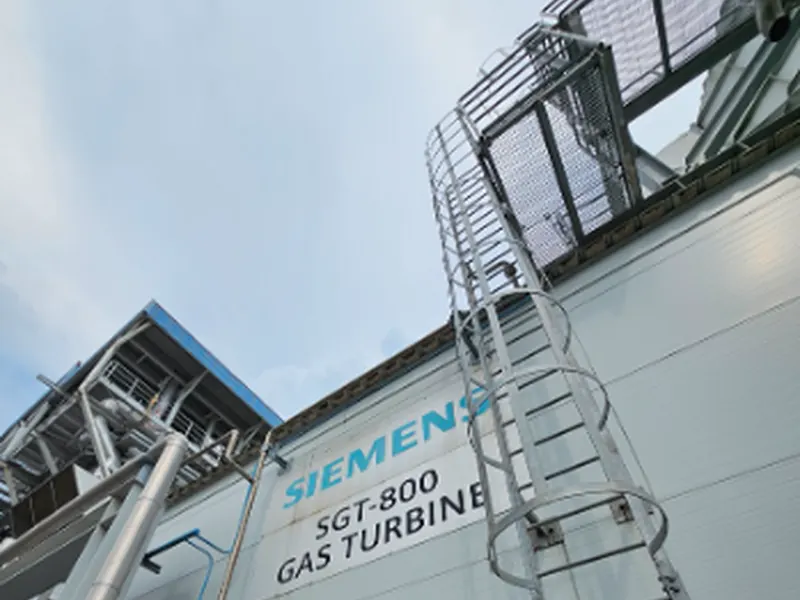
- SGT-800: listed in the 45–62 MW(e) class, with simple-cycle ratings from about 45.3 MW(e) to 62.5 MW(e) (Siemens Energy SGT-800 page; portfolio overview on the Siemens Energy gas turbines page).
In practice, one SGT-800 is in a similar output class to three or four SGT-400 units, so the choice is often about plant size and redundancy rather than one being "better" than the other.
Published simple-cycle data (ISO, natural gas)
| SGT-400 | SGT-800 | |
|---|---|---|
| Power output (ratings shown on product page) | 12.9 / 14.3 MW(e) | 45.3 – 62.5 MW(e) |
| Gross efficiency | 35.0% / 35.6% | 38.4% – 41.1% |
| Turbine speed | 9,500 rpm | 6,600 rpm |
| Exhaust mass flow | 40.0 / 44.5 kg/s | 115.1 – 137.7 kg/s |
| Exhaust temperature | 555 / 529 °C | 560 – 596 °C |
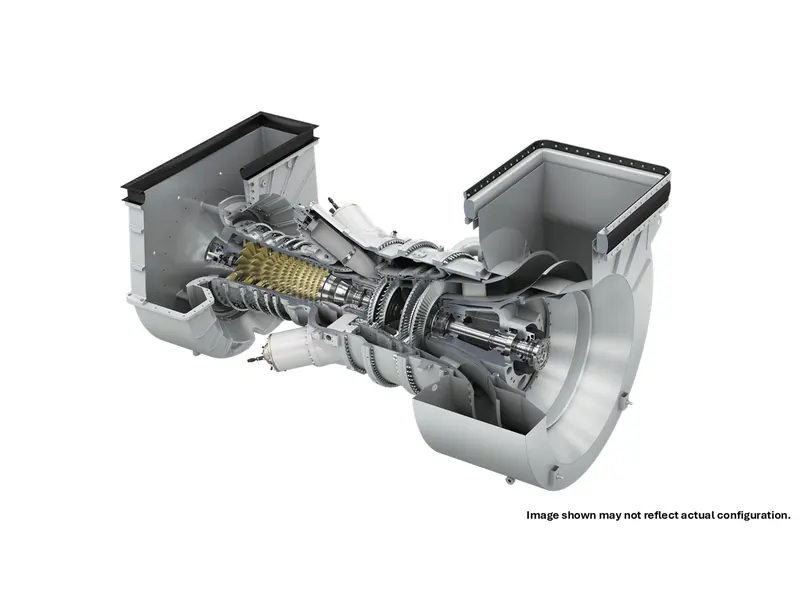
| Shaft arrangement | Twin-shaft | Single-shaft |
Sources: Siemens Energy – SGT-400, Siemens Energy – SGT-800 (accessed 2026-10-29). Older units may have been built to earlier ratings that differ from the current figures.
Typical applications
SGT-400: the twin-shaft design lets it serve both generator drive and mechanical drive (compressors, pumps), and the manufacturer positions it for industrial power generation, combined heat and power and oil & gas use, onshore and offshore.
SGT-800: positioned for larger industrial and utility power generation, cogeneration and combined cycle. Siemens Energy publishes SCC-800 combined-cycle configurations built around one or more SGT-800 units; the manufacturer quotes a 1x1 configuration of up to about 89 MW(e) and a 2x1 of up to about 182 MW(e) gross.
What this means when buying used
- Confirm the exact rating and build standard. Both models have been offered in several ratings over the years. Ask for the nameplate, the original performance guarantee or test report, and the current configuration (combustion system, fuel system, control system version).
- Balance of plant matters more on larger units. An SGT-800 in combined cycle comes with HRSG, steam turbine, cooling and electrical systems; the condition and completeness of these often drive cost and schedule as much as the gas turbine itself.
- Maintenance history. Ask for operating hours, starts, inspection and overhaul records, and whether service was performed by the OEM or a third party.
- Logistics. Package size and weight differ significantly between the two models; transport, foundations and lifting plans should be checked early.
See also: What to check before buying a used or rebuilt gas turbine, and all Siemens listings.
PowerBridge lists equipment for sale by independent owners. We do not own the assets. Buyers connect directly with independent owners via secure escrow.